 By
By 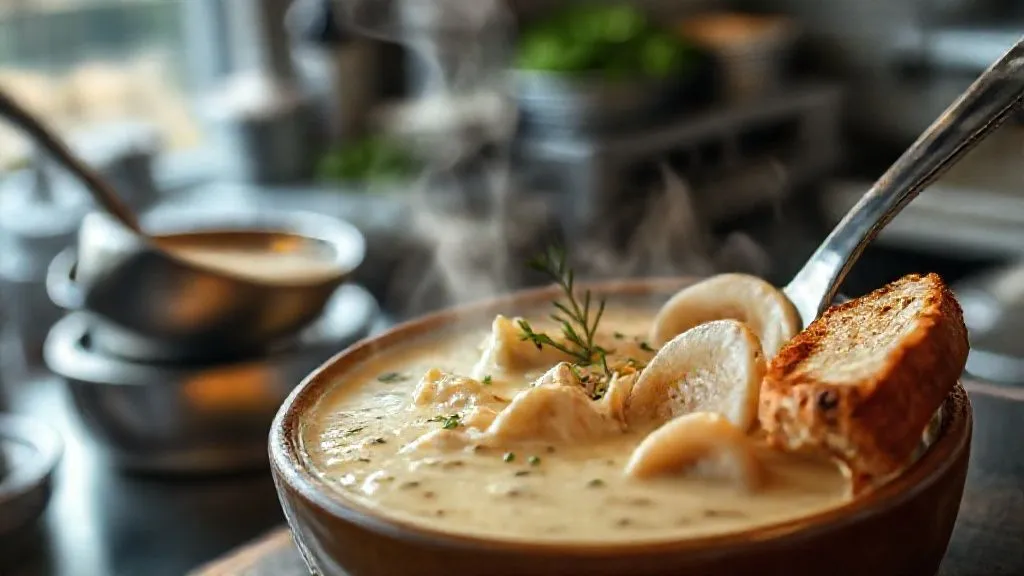
What Causes Watery Clam Chowder When Scaling for Catering?
For over two decades in the demanding world of seafood catering, I've witnessed the culinary triumphs and, occasionally, the heartbreaking disasters. One of the most common and frustrating pitfalls, especially when preparing for a large event, is the dreaded watery clam chowder. It’s a scenario I’ve personally navigated more times than I care to admit early in my career, and the memory of a beautiful, rich chowder transforming into a thin, sad broth still sends shivers down my spine.
The transition from a perfectly executed small batch to a massive catering-sized cauldron introduces a unique set of challenges. What works flawlessly in a 4-quart pot often falls apart in a 40-gallon steam kettle. The ratios shift, the cooking dynamics change, and seemingly minor details become critical failure points. It’s not just about multiplying ingredients; it’s about understanding the science and art of scaling.
In this definitive guide, I'll pull back the curtain on the primary culprits behind watery clam chowder when scaling for catering. We'll delve into the specific physical and chemical changes that occur, offering not just an explanation of the problems, but a robust framework of actionable strategies, expert insights, and real-world solutions that I've refined over years. My goal is to equip you with the knowledge to consistently deliver that velvety, rich chowder your clients expect, every single time.
The Unseen Culprit: Starch Management at Scale
When you're dealing with small batches, a little bit of flour or cornstarch often does the trick. But scaling up introduces a whole new dimension to starch management. I've seen countless chefs simply multiply their thickener, only to end up with either a gummy, pasty mess or, paradoxically, a watery, separated soup.
The issue lies in the hydration and gelatinization properties of starches. In larger volumes, heat distribution can be uneven. The starch at the bottom might overcook and break down, losing its thickening power, while the starch at the top might not fully hydrate. Furthermore, prolonged heating, often necessary for large batches to reach serving temperature, can cause starch molecules to break apart, a phenomenon known as retrogradation or shear thinning, leading to a loss of viscosity over time. This is a critical factor when considering culinary science principles.
Understanding Starch Breakdown in Large Batches
- Uneven Heating: Large pots and steam kettles don't heat uniformly. Hot spots can cause localized starch breakdown.
- Extended Cooking Times: The longer starches are subjected to heat and agitation, the more likely they are to degrade.
- Acidic Ingredients: Clams themselves can be slightly acidic, and if you're using white wine or other acidic elements, these can also contribute to starch breakdown over time, reducing the effectiveness of your thickener.
"Scaling isn't just about multiplication; it's about re-engineering the recipe for the physics of volume. Starch is your friend, but an easily betrayed one in a large pot." - My personal mantra for successful large-batch cooking.
The Great Thickening Act: Roux vs. Slurry Dynamics
Choosing the right thickener and executing its preparation flawlessly is paramount. For clam chowder, the two main contenders are a flour-based roux and a cornstarch or arrowroot slurry. Each has its strengths and weaknesses, especially when scaling.
Mastering the Roux for Volume
A roux, a cooked mixture of fat (butter or oil) and flour, provides a stable, rich thickness. However, scaling a roux requires careful attention:
- Fat-to-Flour Ratio: Maintain a 1:1 ratio by weight. For large batches, this means significant quantities.
- Cooking Time: A roux needs to be cooked long enough to eliminate the raw flour taste but not so long that it darkens too much (unless you're aiming for a specific flavor profile). A 'blond' roux is typical for chowder.
- Temperature Control: When adding liquid to a hot roux, ensure the liquid is cold to prevent lumps. Conversely, if the liquid is hot, the roux should be cold. This differential helps create a smooth emulsion.
- Continuous Stirring: In large vessels, constant, even stirring is crucial to prevent scorching at the bottom and ensure uniform thickening.
I've often found that a slightly darker roux (a 'peanut butter' color) can offer a richer flavor profile that stands up well in a larger, more robust chowder, but be mindful of the flour's decreased thickening power at this stage. It's a delicate balance.

The Slurry: A Quick Fix or a Future Problem?
Cornstarch or arrowroot slurries are quick, gluten-free options. They offer a clear, glossy finish but come with caveats when scaling:
- Shear Thinning: Slurries are more susceptible to breaking down under prolonged heat and agitation, leading to a watery consistency over time, especially during holding for catering.
- Temperature Sensitivity: They achieve maximum thickening at precise temperatures and can thin out if overheated or held for too long.
- Addition Technique: Always mix cornstarch or arrowroot with cold liquid (water, milk, or broth) before adding to the hot chowder to prevent lumps. Add it slowly, whisking continuously, until the desired thickness is achieved.
For catering, I generally lean towards a well-made roux for its stability, often supplemented with a small amount of slurry at the very end if a final adjustment is needed. This hybrid approach gives you the best of both worlds.
Dairy Dilemma: Fat Content and Temperature Shock
Dairy is the heart of a creamy clam chowder. But when scaling, it becomes a major point of vulnerability. The type of dairy, its fat content, and how it's handled can profoundly impact the final consistency and prevent watery clam chowder when scaling for catering.
Understanding Dairy Stability
- Fat Content Matters: Higher fat dairy (heavy cream) is generally more stable and less prone to curdling than lower fat options (milk, half-and-half). The fat globules help stabilize the emulsion.
- Temperature Shock: Adding cold dairy directly to a boiling hot chowder can cause the milk proteins to curdle, leading to a grainy texture and separation.
- Boiling is the Enemy: Once dairy is added, the chowder should never be brought to a rolling boil. Simmering is acceptable, but intense boiling will break the emulsion, resulting in a thin, separated, and often oily-looking chowder.
My strategy is always to temper the dairy. Take a small amount of the hot chowder base and gradually whisk it into the cold cream or milk, slowly bringing its temperature up before incorporating it into the main batch. This gentle approach prevents curdling and maintains that luxurious, smooth texture.
| Dairy Product | Fat Content (%) | Stability for Chowder | Notes |
|---|---|---|---|
| Heavy Cream | 36-40% | Excellent | Most stable, richest flavor. |
| Light Cream / Half-and-Half | 10-18% | Moderate | Prone to curdling if boiled; temper carefully. |
| Whole Milk | 3.25% | Low | Least stable, often leads to thinness and curdling. |
| Evaporated Milk | ~6.5% | Good (after tempering) | Concentrated flavor, good for stability but must be tempered. |
Clam & Liquid Ratios: The Hidden Dilution Factor
This is where many scaling efforts go awry. It's not just the clams themselves, but the liquid they bring to the party, and how other liquids are balanced. When you're dealing with hundreds of pounds of clams, the amount of liquid they release is substantial and must be factored into your total liquid calculations to avoid watery clam chowder when scaling for catering.
The Problem of Clam Liquor and Vegetable Moisture
- Natural Clam Juices: Fresh or canned clams come with their own liquor. When you multiply the quantity of clams, you also multiply this liquid. If you don't reduce your added broth or water proportionally, you're inherently diluting your chowder.
- Vegetable Water Release: Onions, celery, and especially potatoes will release significant amounts of water as they cook, particularly in a large, enclosed vessel where steam can't easily escape.
- Over-Reliance on Broth: A common mistake is to simply add more chicken or vegetable broth to reach volume, without considering the existing liquids from other ingredients.
Case Study: The Grand Oyster Event Chowder Debacle
I recall a client, 'The Grand Oyster', a high-end seafood restaurant venturing into catering. Their executive chef, brilliant with small plates, scaled their signature clam chowder recipe by simply multiplying all ingredients by 100 for a gala. They used the same amount of clam juice per pound of clams as their small batch, plus the standard amount of fish stock. The result? A flavor-packed, but undeniably thin and watery chowder that barely clung to the spoon. The chef hadn't accounted for the cumulative liquid from 100 pounds of clams and the extra water released by the vegetables in their massive steam kettle. We worked together to adjust the liquid ratio, reducing the initial stock by 25% and allowing for natural reduction, which finally achieved the desired consistency. It was a stark lesson in the hidden dilution factor.
My advice? Start with less added liquid than you think you need. You can always add more, but you can't easily take it away without compromising flavor or over-thickening with starch.
Potatoes: Friend or Foe to Chowder Consistency?
Potatoes are a cornerstone of clam chowder, contributing texture and a subtle earthiness. However, they can be a double-edged sword when it comes to consistency, particularly in large batches.
Starchy vs. Waxy Potatoes
- Starchy Potatoes (e.g., Russet): These break down easily, releasing a lot of starch into the chowder, which can contribute to thickening. However, if overcooked, they can become mushy and create a mealy texture, or worse, contribute to starch breakdown leading to thinness.
- Waxy Potatoes (e.g., Yukon Gold, Red Bliss): These hold their shape better, providing distinct chunks of potato without releasing as much starch. They are less likely to over-thicken the chowder but also offer less natural thickening power.
For a balanced chowder, I often use a combination: a small amount of starchy potato for natural thickening and a larger quantity of waxy potatoes for texture. The timing of their addition is also crucial. Adding them too early means they'll cook for too long, potentially turning to mush or releasing too much starch. I usually add potatoes after the initial stock and aromatics have simmered for a while, allowing them to cook just until tender, not falling apart.
The Holding Game: Temperature, Time, and Agitation
For catering, chowder isn't just cooked; it's held. And the holding phase is where many perfectly good chowders turn watery. This is often an overlooked aspect of food safety and quality control in catering.
Understanding Syneresis and Shear Thinning During Holding
- Syneresis (Water Separation): This is the expulsion of liquid from a gel, often seen in starch-thickened products when they are held at temperature for extended periods. The starch network begins to contract, squeezing out water.
- Prolonged Heat: Holding chowder above 140°F (60°C) for several hours, as is common in catering, can cause starches to degrade and dairy emulsions to break down.
- Constant Agitation: While necessary to prevent scorching, continuous stirring in chafing dishes or holding vessels can contribute to shear thinning, breaking down the starch molecules and leading to a thinner consistency.
To combat this, I recommend preparing the chowder slightly thicker than desired initially, anticipating some thinning during holding. Also, minimize stirring during holding and ensure the temperature is just above the safe zone, rather than excessively hot. A Bain-Marie or steam table set to a gentle heat is preferable to direct heat.
Equipment & Process: Consistency in the Catering Kitchen
The tools and techniques you employ are just as crucial as your ingredients. Scaling up isn't just about bigger pots; it's about understanding how equipment interacts with volume.
The Right Tools for the Job
- Pot Size and Shape: Large, wide-bottomed steam kettles or heavy-gauge stockpots are ideal for even heat distribution. Thin-bottomed pots are prone to scorching.
- Agitation Equipment: Long-handled, sturdy whisks and spoons are essential for reaching the bottom of large pots and ensuring thorough mixing. Mechanical stirrers in steam kettles can be a godsend but must be used at appropriate speeds to avoid shear thinning.
- Accurate Measurement: Investing in commercial-grade scales and liquid measures is non-negotiable. Eyeballing quantities at scale is a recipe for inconsistency and watery clam chowder.
Standardizing Your Process
- Mise en Place at Scale: Have all ingredients prepped and measured before you start. This is even more critical for large batches where timing is everything.
- Batch Cooking: If your equipment isn't suited for one massive batch, consider cooking in smaller, manageable batches and then combining them carefully. This can help maintain consistency and control.
- Documentation: For every successful catering event, document your exact recipe, process, and any adjustments made. This creates a valuable institutional knowledge base.
"Consistency is the hallmark of a professional kitchen. When scaling, your process must be as precise as your ingredients."
Mastering the Final Touch: Assessment and Adjustment
Even with meticulous planning, the final assessment and potential adjustments are vital. This is where your experience and palate come into play, preventing watery clam chowder when scaling for catering from reaching the serving line.
How to Test Consistency Professionally
- Spoon Test: Dip a spoon into the chowder, pull it out, and observe how the chowder coats the back of the spoon. A perfect chowder will coat it lightly but evenly, without running off immediately.
- Palate Test: While consistency is key, never forget the taste. A chowder can be perfectly thick but bland. Adjust seasoning as needed.
- Temperature Check: Ensure the chowder is at the correct serving temperature throughout the batch.
Emergency Thickening Methods (Use with Caution)
If, despite all your efforts, your chowder is still too thin, here are a few last-minute fixes:
- Cornstarch Slurry: As discussed, a small, carefully prepared cornstarch slurry can be whisked in slowly. Bring to a gentle simmer for 1-2 minutes to activate the starch, then remove from heat. Be cautious not to add too much, or it will become gummy.
- Potato Flakes/Instant Mashed Potatoes: A small amount of instant potato flakes can absorb excess liquid and thicken the chowder without significantly altering flavor. Whisk in sparingly until desired consistency. This is a trick I learned early on in high-volume kitchens.
- Beurre Manié: A paste of equal parts softened butter and flour, kneaded together, can be whisked into simmering chowder. It melts and thickens without lumps, though it can add a raw flour taste if not cooked out briefly.
Remember, these are emergency measures. The goal is to prevent the problem through good planning, not to constantly fix it at the last minute. As Forbes often emphasizes in business leadership, proactive problem-solving is always superior to reactive damage control.
Frequently Asked Questions (FAQ)
Can I use gluten-free thickeners for large-batch clam chowder? Absolutely. Cornstarch and arrowroot are excellent gluten-free options. However, as discussed, they are more prone to shear thinning and breakdown under prolonged heat and agitation. If using them for catering, plan to add them closer to serving time or prepare the chowder slightly thicker, anticipating some thinning during holding. A blend of gluten-free flours might also offer more stability than a single starch.
How far in advance can I make clam chowder for catering without it becoming watery? For optimal texture and flavor, I recommend making the base (aromatics, potatoes, broth) a day in advance. Add the clams and dairy, and complete the final thickening, no more than 4-6 hours before serving. This minimizes the time the delicate dairy and starch components are exposed to heat, significantly reducing the risk of syneresis and thinning. Proper cooling and reheating procedures are paramount.
What's the best way to reheat large quantities of clam chowder without it thinning out? Reheat gently and slowly. Use a steam kettle or a large, heavy-bottomed pot over low to medium heat, stirring frequently but not vigorously. Avoid rapid boiling. Bring it just to the safe serving temperature (165°F/74°C for reheating) and hold it there. If it seems too thick after reheating, you can carefully whisk in a bit of warm milk or broth to adjust consistency.
Does freezing affect clam chowder consistency, especially when scaling? Yes, freezing can significantly impact the consistency. Dairy-based soups, particularly those thickened with starch, often separate or become grainy after thawing due to ice crystal formation and starch retrogradation. If you must freeze, consider freezing the clam chowder base *before* adding dairy and final thickeners. Add these fresh upon reheating. This is a common strategy in commercial kitchens to maintain quality.
How do I prevent 'scorching' or burning in large pots of clam chowder? Scorching is a major concern with large batches. To prevent it: use heavy-bottomed pots or steam kettles that distribute heat evenly; cook over moderate, not high, heat; stir continuously, ensuring you scrape the bottom of the pot; and avoid overfilling the pot, which can lead to uneven cooking and more difficult stirring. A heat diffuser can also be helpful for large pots on gas stoves.
Key Takeaways and Final Thoughts
Preventing watery clam chowder when scaling for catering isn't about magic; it's about meticulous planning, a deep understanding of ingredients, and precise execution. As a veteran in this field, I've seen firsthand how these principles translate into culinary success and client satisfaction.
- Understand Starch Dynamics: Recognize how starches behave differently in large volumes and choose your thickener wisely.
- Respect Your Dairy: Tempering and avoiding high heat are non-negotiable for creamy, stable results.
- Balance Your Liquids: Account for natural moisture from clams and vegetables to prevent accidental dilution.
- Manage Potatoes Wisely: Select the right type and add them at the optimal time for desired texture and thickening.
- Master the Holding Phase: Be aware of syneresis and shear thinning, and manage temperatures and agitation accordingly.
- Equip and Standardize: Use appropriate tools and develop repeatable processes for consistent quality.
The journey from a small, perfect pot of chowder to a massive, equally perfect catering batch is a challenging one, but it's entirely achievable with the right knowledge and approach. Embrace these insights, experiment in your own kitchen, and you'll soon be delivering clam chowder that stands proud, rich, and creamy, earning you accolades and repeat business. Your clients deserve nothing less than perfection, and now you have the tools to deliver it.
Recommended Reading
- Unlock the Secret: Can You Prep Quick Air Fryer Meals Ahead of Time?
- 7 Steps to Delicious Low-Sodium Seafood for Diabetics
- The Ultimate Secret: How to Keep Sous Vide Vegetables Vibrantly Colorful
- 7 Ways to Adapt Mediterranean Recipes for Diverse Dietary Needs
- 7 Pro Strategies: Stop Salmon Skin Sticking on High-Volume Grill Cook
0 Comentários: