 By
By 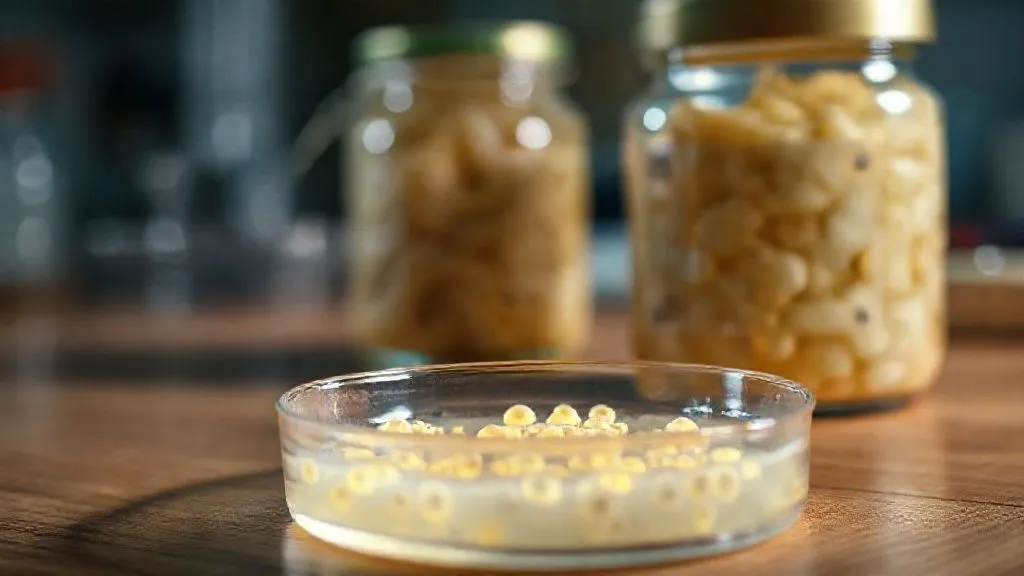
Accurately Verifying Live Probiotic Count in Commercial Sauerkraut? The Expert's Guide
For over 15 years in the dynamic world of fermentation food science, I've witnessed a growing chasm between consumer expectation and product reality, particularly when it comes to the 'live and active' claims on fermented foods. There's a genuine desire for health benefits, yet a pervasive skepticism about whether products truly deliver on their probiotic promises.
The problem is multifaceted: consumers are often left guessing, relying solely on labels that may or may not reflect the true microbial content. Producers, on the other hand, grapple with complex biological systems, shelf-life challenges, and the intricacies of accurate enumeration. This uncertainty undermines trust and can lead to ineffective products.
This guide isn't just a theoretical discourse; it's a distillation of practical experience and scientific rigor. I'll walk you through the precise methodologies, critical considerations, and actionable frameworks required for accurately verifying live probiotic count in commercial sauerkraut, empowering both consumers to make informed choices and producers to ensure integrity.
Why Accurate Probiotic Verification Matters: Beyond the Label
The allure of sauerkraut lies in its vibrant flavor and its reputation as a powerhouse of beneficial microbes. However, for a product to truly be considered 'probiotic,' it must contain live microorganisms that, when administered in adequate amounts, confer a health benefit on the host. Without accurate verification, these claims are merely marketing.
From a consumer perspective, knowing the actual live probiotic count ensures they are investing in a product that genuinely supports gut health. For producers, it's about brand integrity, regulatory compliance, and delivering on a promise. Misleading claims, even unintentional ones, can erode trust and lead to significant repercussions in a health-conscious market.
"In the world of fermented foods, a 'live' claim without verifiable data is like a promise whispered in the wind – easily forgotten and hard to trust."
Furthermore, the scientific community is constantly refining its understanding of specific strains and their health benefits. Accurate enumeration allows for research into dose-response relationships and helps validate the efficacy of particular products. This is crucial for advancing the entire field of functional foods.
Understanding CFU: What 'Colony-Forming Units' Really Mean
When you see a probiotic count on a label, it's almost always expressed in 'CFU,' or Colony-Forming Units. CFU represents the number of viable (live and able to multiply) bacterial cells in a sample that are capable of forming a colony on a suitable agar medium under specific conditions. It's the most common metric, but it's not without its nuances.
A high CFU count generally indicates a potent product, but it's essential to understand that CFU is an estimate. It doesn't count every single viable cell, only those that can grow and form a visible colony under the chosen laboratory conditions. Different strains have different growth requirements, and the food matrix itself can influence recovery rates.

The Challenges of CFU Measurement
Measuring CFU accurately, especially in a complex food like sauerkraut, presents several challenges. Firstly, distinguishing between viable and non-viable cells is critical; dead cells don't confer benefits. Secondly, different probiotic strains require specific growth media and incubation conditions, meaning a 'one-size-fits-all' approach is inadequate.
The 'matrix effect' of sauerkraut – its high acidity, salt content, and presence of other microbial species – can also impact the recovery and growth of target probiotic strains during laboratory analysis. This requires experienced microbiologists to optimize methods to ensure accurate results. Moreover, some probiotic strains are sensitive to oxygen, necessitating anaerobic culturing techniques.
The Gold Standard: Laboratory Culture-Based Methods
The most widely accepted and traditional method for accurately verifying live probiotic count in commercial sauerkraut is the laboratory culture-based plate count. This involves culturing diluted samples of the sauerkraut on selective agar media, incubating them, and then counting the visible colonies. It's a meticulous process that requires precision and expertise.
The principle is straightforward: each viable bacterial cell, when properly isolated and provided with nutrients, will multiply to form a visible colony. By counting these colonies and knowing the dilution factor, the original concentration of viable bacteria in the sauerkraut can be calculated. This method directly measures 'live' organisms capable of reproduction.
Step-by-Step: Conducting a Viable Plate Count
To give you a clearer picture, here's a simplified breakdown of the process a reputable lab would follow:
- Sample Preparation: A representative sample of sauerkraut is taken, homogenized, and accurately weighed.
- Serial Dilution: The sample is then serially diluted in a sterile diluent (e.g., peptone water) to reduce the bacterial concentration to a countable range. This is crucial for obtaining accurate colony counts.
- Plating: Aliquots of the diluted samples are spread onto specialized agar plates. The choice of agar is critical; MRS agar is common for lactic acid bacteria, but specific selective media might be used to target particular probiotic strains.
- Incubation: Plates are incubated under specific conditions (temperature, time, atmosphere – e.g., anaerobic for many lactic acid bacteria) optimized for the growth of the target probiotics.
- Colony Counting: After incubation, colonies are counted using a colony counter. The counts from plates within a statistically significant range (typically 30-300 colonies) are used for calculations.
- Calculation of CFU/g or mL: The number of colonies is multiplied by the dilution factor to determine the CFU per gram or milliliter of the original sauerkraut sample.
This method, while time-consuming, provides a direct measure of viable, culturable cells, which is the definition of a probiotic's activity. According to AOAC International standards, validation of these methods is essential for reliable results.
Different media are used to isolate and enumerate specific types of bacteria. Here's a quick look at some common ones:
| Media Type | Target Organisms | Conditions |
|---|---|---|
| MRS Agar | Lactobacilli, Pediococci | Anaerobic, 30-37°C |
| M17 Agar | Streptococci, Lactococci | Aerobic/Anaerobic, 30°C |
| Rogosa SL Agar | Lactobacilli (selective) | Anaerobic, 37°C |
| Bile Esculin Agar | Enterococci (selective) | Aerobic, 37°C |
Emerging Technologies: Beyond Traditional Plating
While plate counting remains the gold standard, advancements in technology offer complementary and sometimes faster methods for probiotic enumeration. These methods often provide different types of information, such as total cell count (viable and non-viable) or specific DNA presence, which can be valuable when interpreted correctly.
Flow Cytometry: Rapid & Specific Probiotic Enumeration
Flow cytometry is a powerful technique that can rapidly count and characterize individual cells in a liquid suspension. In the context of probiotics, it can differentiate between live and dead cells using fluorescent stains that penetrate only cells with compromised membranes. This offers a quicker alternative to plate counting, often providing results in hours rather than days.
The benefits include speed, high throughput, and the ability to detect specific strains if antibodies or genetic probes are used. However, it requires specialized equipment and expertise, and the results need careful correlation with traditional CFU counts, especially when dealing with cell clumps or biofilms common in fermented foods. It measures individual cells, not necessarily colony-forming units, so interpretation is key.
Quantitative PCR (qPCR): Detecting Strain Presence, Not Always Viability
Quantitative Polymerase Chain Reaction (qPCR) is a molecular technique that detects and quantifies specific DNA sequences. For probiotics, qPCR can identify the presence and relative abundance of specific bacterial strains by targeting their unique genetic markers. This is incredibly useful for verifying that a particular claimed strain is actually present in the sauerkraut.
The limitation, however, is that qPCR detects DNA, which can persist even in dead cells. Therefore, it doesn't directly measure viability or colony-forming units. While modified qPCR techniques can attempt to quantify viable cells by targeting RNA (which degrades faster than DNA in dead cells) or using propidium monoazide (PMA) to prevent amplification of DNA from dead cells, these methods are more complex and still require careful validation against traditional CFU counts. It's excellent for species identification and ensuring purity, but less direct for 'live count'.

Navigating Commercial Sauerkraut Labels: What to Look For
As a consumer, how do you make sense of the labels? My advice is to be an informed skeptic. Look beyond generic terms and seek specific information. A truly transparent producer will provide more than just a vague 'live and active cultures' claim.
Firstly, look for an actual CFU count, often expressed 'at time of manufacture' or 'at expiration'. The 'at expiration' claim is more valuable as it reflects the number of live cultures you'll consume. Secondly, check for specific strain names (e.g., Lactobacillus plantarum, Lactobacillus brevis) rather than just generic 'lactic acid bacteria.' This indicates a more controlled and intentional fermentation.
Thirdly, investigate the company's commitment to third-party testing. If they openly share their quality control practices or third-party lab results, it's a strong indicator of trustworthiness. Transparency is the bedrock of consumer confidence in this niche.
Case Study: Verifying 'FarmFresh Sauerkraut' Claims
I recall a client, 'FarmFresh Sauerkraut,' a small artisanal producer who prided themselves on traditional methods. They initially labeled their product with 'billions of probiotics,' based on an assumption rather than actual testing. When they sought my guidance to accurately verify live probiotic count in commercial sauerkraut, we implemented a rigorous testing protocol.
Our initial independent lab tests revealed their product, while delicious, had inconsistent CFU counts, sometimes falling below their advertised claims, especially towards the end of its shelf life. We discovered issues with their fermentation temperature control and post-fermentation handling. By implementing a standardized temperature monitoring system and optimizing their packaging for anaerobic conditions, subsequent testing showed a significant increase in viable probiotic counts and consistency across batches. This not only allowed them to confidently update their labels with accurate 'CFU at expiration' but also dramatically boosted consumer trust and sales.
"Don't just assume your product is potent; prove it. Verification isn't a cost, it's an investment in your brand's future."
Factors Affecting Probiotic Survival in Sauerkraut
The journey of probiotics from raw cabbage to your plate is fraught with potential hazards. Understanding these factors is paramount for both producers aiming to maintain viable counts and consumers trying to preserve them.
Key factors influencing probiotic survival include the initial microbial load, the fermentation process itself (temperature, salt concentration, time), the final pH of the product, and crucially, post-fermentation handling, packaging, and storage conditions. Even the type of cabbage can have an impact!
The Impact of Processing and Storage
- Temperature: High temperatures during processing (e.g., pasteurization, even mild heating) will kill probiotics. Optimal cold storage (refrigeration) is critical for maintaining viability.
- Acidity (pH): While lactic acid bacteria thrive in acidic environments, extreme or fluctuating pH levels can stress and kill them. A stable, low pH (around 3.5-4.0) is ideal.
- Salt Concentration: Salt is essential for fermentation, but excessively high or low concentrations can negatively impact specific probiotic strains.
- Oxygen Exposure: Many beneficial lactic acid bacteria are anaerobic or microaerophilic. Exposure to oxygen, especially after packaging, can rapidly reduce viability.
- Packaging: Airtight, opaque packaging helps protect probiotics from oxygen and light, both of which can degrade microbial viability over time.
- Shelf Life: Even under ideal conditions, probiotic counts naturally decline over time. This is why 'CFU at expiration' is so important.

Choosing a Reputable Third-Party Lab for Testing
For producers, or even for a consumer group wanting to verify claims, selecting the right third-party laboratory is perhaps the most critical step in accurately verifying live probiotic count in commercial sauerkraut. Not all labs are created equal, especially when dealing with the complexities of food microbiology and specific probiotic strains.
I cannot stress enough the importance of choosing a lab with proven expertise in probiotic enumeration. This isn't a task for a general microbiology lab; it requires specialized knowledge of selective media, anaerobic techniques, and an understanding of the challenges posed by fermented food matrices.
Key Steps for Selecting an Expert Lab
- Accreditation: Ensure the lab is accredited to international standards (e.g., ISO 17025) for the specific tests you require. This guarantees their competence and impartiality. You can check bodies like ILAC (International Laboratory Accreditation Cooperation) for accredited labs.
- Expertise in Probiotics: Ask for their experience with probiotic-containing foods, specifically fermented vegetables. Inquire about their methods for specific strains relevant to sauerkraut.
- Methodology Transparency: A reputable lab will be transparent about their testing methodologies, including the types of agar used, incubation conditions, and how they handle matrix effects.
- Reporting Clarity: They should provide clear, detailed reports that include CFU counts, methodology used, and any limitations.
- Turnaround Time & Cost: While not the primary factor, consider their efficiency and pricing structure. However, never compromise accuracy for speed or cost.
Establishing an Internal Quality Control Protocol
For sauerkraut producers, relying solely on external labs for periodic testing isn't enough. A robust internal quality control (QC) protocol is essential for continuous monitoring and maintaining consistent product quality. This proactive approach helps identify issues early, minimizing batch losses and ensuring customer satisfaction.
An effective QC protocol should integrate checks at various stages of production, from raw material inspection to finished product storage. It's about building quality into every step, not just testing for it at the end.
Key Steps for In-House Monitoring
- Raw Material Verification: Test incoming cabbage for microbial load and contaminants.
- Fermentation Monitoring: Regularly monitor pH, salinity, and temperature during fermentation. These are critical indicators of microbial activity and health.
- Mid-Process Sampling: Conduct periodic (e.g., weekly or at a specific fermentation milestone) in-house viable plate counts using basic agar to track general microbial growth and ensure the fermentation is progressing as expected. This might not be strain-specific but indicates activity.
- Finished Product Spot Checks: Perform more detailed internal CFU counts on a subset of finished product batches, focusing on the predominant lactic acid bacteria.
- Environmental Monitoring: Swab surfaces and equipment in the production area to check for undesirable microbial contamination.
- Shelf-Life Studies: Conduct ongoing stability studies by testing stored samples at various intervals to track probiotic viability over the product's declared shelf life.
Integrating these steps into your production workflow creates a comprehensive system for accurately verifying live probiotic count in commercial sauerkraut, ensuring every jar meets your high standards. According to a Harvard Business Review article on quality control, consistent internal checks are a hallmark of industry leaders.
| QC Checkpoint | Parameter | Frequency |
|---|---|---|
| Raw Cabbage Incoming | Visual Inspection, Microbial Load | Per Batch |
| Fermentation Vat | pH, Salinity, Temperature | Daily |
| Mid-Fermentation | Total Lactic Acid Bacteria CFU | Weekly/Milestone |
| Finished Product (Internal) | Total Lactic Acid Bacteria CFU | Every 5th Batch |
| Finished Product (External Lab) | Specific Probiotic Strain CFU | Quarterly/Bi-Annually |
| Storage Conditions | Temperature Monitoring | Continuous |
The Future of Probiotic Verification: AI and Advanced Sensors
The field of probiotic verification is continuously evolving. I foresee a future where the process of accurately verifying live probiotic count in commercial sauerkraut becomes even more sophisticated, leveraging artificial intelligence and advanced sensor technologies. Imagine real-time, in-line monitoring systems that can assess microbial activity without destructive sampling.
Spectroscopy, biosensors, and AI-driven image analysis of petri dishes could dramatically reduce turnaround times and improve accuracy. These technologies promise to move beyond traditional plate counts, offering insights into microbial metabolic activity and even specific gene expression related to probiotic function. While still largely in research phases, these innovations hold immense potential for the fermentation industry.
Frequently Asked Questions (FAQ)
Q: Does pasteurization kill all probiotics in sauerkraut? A: Yes, pasteurization is a heat treatment designed to kill microorganisms, including beneficial probiotics, to extend shelf life and ensure food safety. If sauerkraut is pasteurized, it will not contain live probiotics, even if it was fermented. Always look for 'unpasteurized' or 'raw' labels for live cultures.
Q: Can I test the probiotic count of sauerkraut at home? A: While you can observe fermentation activity (like bubbling) at home, accurately quantifying live probiotic count in commercial sauerkraut to a CFU level requires specialized laboratory equipment, sterile conditions, and microbiological expertise. Home tests are generally not reliable for precise enumeration.
Q: How often should commercial sauerkraut be tested for probiotic count? A: For producers, it's recommended to conduct initial baseline testing for every new product formulation. Regular verification should then occur quarterly or bi-annually by an accredited third-party lab, complemented by consistent in-house quality control checks for each batch. This ensures consistent product quality and accurate labeling throughout its shelf life.
Q: What is considered a 'minimum effective' CFU count for health benefits? A: This is a complex question with no single answer, as it depends on the specific probiotic strain and the health benefit being targeted. However, many studies suggesting health benefits use doses ranging from 10^8 to 10^10 CFU per serving. It's important to remember that 'more' isn't always 'better' without specific research supporting the dose.
Q: Are all probiotic strains found in sauerkraut equally beneficial? A: While the lactic acid bacteria naturally present in sauerkraut (like L. plantarum, L. brevis) are generally recognized as beneficial, the specific health effects can vary by strain. Research is ongoing, but different strains may offer distinct benefits. It's important to look for products that specify their strains if you're targeting a particular health outcome.
Key Takeaways and Final Thoughts
- Accurately verifying live probiotic count in commercial sauerkraut is crucial for consumer trust, product efficacy, and regulatory compliance.
- CFU (Colony-Forming Units) is the primary metric, but its measurement requires precise laboratory culture-based methods.
- Emerging technologies like flow cytometry and qPCR offer valuable insights but must be interpreted carefully in conjunction with traditional CFU counts.
- Consumers should seek transparent labels detailing CFU at expiration and specific probiotic strains.
- Producers must implement robust internal QC protocols and partner with accredited third-party labs specializing in probiotic enumeration.
- Factors like temperature, pH, oxygen, and packaging significantly impact probiotic survival.
The journey to truly understand and ensure the probiotic potency of commercial sauerkraut is one of continuous learning and rigorous application of science. As an industry specialist, I've seen the transformation that accurate verification brings – not just to product quality, but to the very credibility of the fermented food market. Embrace these methodologies, foster transparency, and together, we can ensure that the promise of probiotic-rich sauerkraut is always delivered.
Recommended Reading
- 7 Steps: Protect Your Craft Brewery's Reputation from Off-Flavors
- Unlock Flavor: 7 Expert Hacks for Irresistible Slow Cooker Meals
- Scaling Stir-Fries for Catering: 7 Pro Strategies to Prevent Soggy Results
- 7 Proven Ways: Make Vegan Restaurant Entrees Irresistible to Meat-Eaters
- Ultimate Guide: Best Freezer-Friendly Meal Prep Recipes for Beginners




0 Comentários: