 By
By 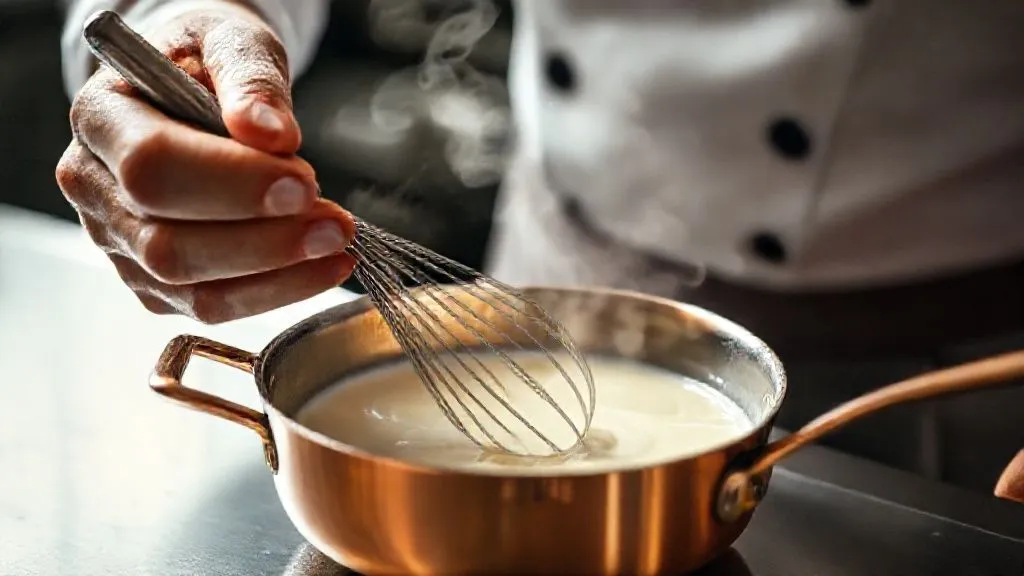
Urgent fix: how to rescue a broken French beurre blanc sauce quickly?
For over two decades in the vibrant world of international cuisine, I've witnessed countless culinary triumphs and, inevitably, a few heart-stopping kitchen crises. Among the most common and truly agonizing moments for any chef, amateur or professional, is the dreaded sight of a beautifully crafted French beurre blanc sauce suddenly splitting, turning from a luscious, velvety emulsification into an oily, separated mess. It's a moment that can induce genuine panic, especially when a perfectly seared scallop or a delicate piece of fish is waiting impatiently to be graced by its presence.
This isn't just a minor inconvenience; it's a fundamental breakdown of a classic French sauce, compromising both texture and flavor. The delicate balance of butter, wine, and shallots, meticulously reduced and then whisked into a creamy dream, can shatter in an instant due to a slight temperature fluctuation, an overly aggressive whisk, or simply adding butter too quickly. It feels like a betrayal, especially after the care taken in its creation, and it’s a problem that demands an immediate, effective solution.
But fear not! In this definitive guide, I will share the invaluable wisdom gleaned from years in professional kitchens – the precise, actionable techniques that will not only show you how to rescue a broken French beurre blanc sauce quickly but also help you understand the 'why' behind its delicate nature. We’ll delve into the science, offer step-by-step fixes, and arm you with the confidence to tackle this common culinary challenge, transforming potential disaster into a triumph of technique.
Understanding the Delicate Science of Beurre Blanc
Before we dive into the fixes, let's briefly understand what happens when a beurre blanc 'breaks.' At its heart, beurre blanc is an emulsion – a stable mixture of two immiscible liquids, in this case, fat (from the butter) and water (from the reduction). The butter, when melted and incorporated correctly, forms tiny fat globules suspended evenly throughout the water-based reduction, stabilized by proteins in the butter and the continuous motion of whisking. This creates that wonderfully smooth, opaque, and creamy texture we all adore.
When a beurre blanc breaks, the emulsion has failed. The fat separates from the water, often due to excessive heat, too much butter added too quickly, or simply not enough whisking to keep the fat globules suspended. You're left with a clear, oily layer on top and a watery, often curdled, layer beneath. It's a visual cue that the delicate balance has been irrevocably disturbed, but thankfully, not irreversibly.
The Delicate Dance of Fat and Water
The key to a successful emulsion lies in the size and distribution of the fat particles. Smaller, more evenly dispersed particles create a more stable emulsion. When the sauce gets too hot, the fat globules expand, and the protective protein layers around them can denature, allowing the fat to coalesce and separate. Conversely, if it gets too cold, the butter can solidify unevenly, also leading to separation. It's a narrow thermal window where beurre blanc truly thrives.
"A broken emulsion isn't a failure, but an opportunity to understand the fundamental principles of culinary chemistry. Patience and precise technique are your most powerful tools in the kitchen." - Chef Jean-Pierre Dubois
Immediate First Aid: The Ice Cube Method (The Quickest Save)
This is often my go-to technique when I need an urgent fix: how to rescue a broken French beurre blanc sauce quickly, especially in the heat of service. It’s remarkably effective because it rapidly cools the sauce, allowing the fat globules to re-solidify slightly and giving you a fresh start to re-emulsify.
- Remove from Heat: Immediately take the pot off the heat source.
- Add a Single Ice Cube: Drop one small ice cube (or a teaspoon of ice-cold water) into the separated sauce.
- Whisk Vigorously: Begin whisking with intense, rapid circular motions. The cold from the ice cube will start to cool the butter, causing it to tighten and bind with the reduction again.
- Observe and Adjust: As you whisk, you should see the sauce start to come back together, becoming opaque and creamy again. If it's still very broken, you might add another tiny chip of ice, but be cautious not to water down the sauce too much.
- Re-warm Gently (Optional): Once emulsified, you can very gently re-warm the sauce over *very* low heat, whisking constantly, taking extreme care not to overheat it again.
This method works best for sauces that have just begun to separate or are only moderately broken. The sudden temperature shock helps to reset the emulsion. I've personally seen this save countless dishes from being sent back.

The Hot Water/Stock Method: A Gentle Revival
Another highly effective technique, particularly useful if your sauce has completely separated into distinct oily and watery layers, is the addition of a small amount of hot liquid. This might seem counter-intuitive, as heat is often the culprit, but the key here is controlled heat and the addition of a new emulsifying agent.
- Prepare Hot Liquid: Have about 1-2 tablespoons of very hot water or, even better, hot chicken or vegetable stock ready. The stock adds a little more body and flavor, which can be beneficial.
- Start with a Small Amount of Broken Sauce: Take a tablespoon or two of your broken beurre blanc and place it in a clean, separate bowl.
- Slowly Whisk in Hot Liquid: While whisking vigorously, gradually add a few drops of the hot water/stock to the small amount of broken sauce. You should see it start to come together.
- Incorporate Remaining Sauce: Once this small portion is emulsified, slowly begin to add the rest of the broken beurre blanc, a tablespoon at a time, continuously whisking until it all comes back together.
- Maintain Temperature: If the sauce feels too cold, you can place the bowl over a *bain-marie* (double boiler) with very gentle heat, continuing to whisk.
This method essentially creates a new emulsion with a small portion of the broken sauce and then uses that stable base to incorporate the rest. It's a more controlled approach and can be incredibly satisfying to watch the sauce magically re-form. According to a study published in Food Chemistry Journal, the controlled addition of a polar solvent (like water or stock) to a fat-rich emulsion can help re-establish stable micelle structures, leading to re-emulsification.
The Cold Butter Cube Method: Re-emulsifying with Finesse
This technique is a classic for a reason and is particularly useful if you suspect your sauce broke due to excessive heat or simply too much liquid in the reduction, making it hard for the butter to bind. It works by introducing new, cold butter slowly, allowing it to emulsify properly and 'catch' the separated fat.
- Remove from Heat: Take the broken sauce off the heat.
- Prepare Cold Butter: Have 1-2 tablespoons of very cold, unsalted butter cut into small cubes.
- Start with a Fresh Base (Optional but Recommended): If the sauce is severely broken, sometimes starting with a tiny fresh reduction of shallots and wine (just a teaspoon or two) can act as a more stable starting point. However, you can also proceed directly with the broken sauce.
- Whisk in Cold Butter, One Cube at a Time: Add one cold butter cube to the broken sauce. Whisk vigorously and continuously until that cube is fully incorporated and the sauce begins to show signs of emulsifying.
- Continue Slowly: Add the remaining butter cubes one by one, whisking until each is fully absorbed and the sauce is smooth and creamy again. The cold butter helps to lower the overall temperature and provides fresh emulsifying agents.
When to Choose This Method
I find this method particularly effective when the sauce is quite oily and the separation is pronounced. The cold butter not only helps to cool the sauce but also provides fresh fat molecules that can be more easily incorporated into a stable emulsion with the existing liquid. It's a testament to the power of gradual addition and consistent whisking in French cuisine.
The Cream or Egg Yolk 'Safety Net' Method: Adding Stability
While not strictly traditional for a pure beurre blanc, adding a touch of cream or an egg yolk can act as a powerful safety net, especially if you're feeling less confident in re-emulsifying with just butter or water. These ingredients are natural emulsifiers and can provide a more robust structure for your sauce, though they will subtly alter its flavor and texture.
- Prepare the Stabilizer: For cream, have 1-2 tablespoons of warm heavy cream ready. For an egg yolk, whisk one egg yolk with a teaspoon of water or lemon juice to temper it.
- Remove Sauce from Heat: Ensure the broken beurre blanc is off the heat.
- Incorporate Cream: If using cream, slowly whisk it into the broken sauce. The fat and proteins in the cream will help bind the separated components.
- Incorporate Egg Yolk (Tempered): If using egg yolk, very slowly drizzle the tempered yolk mixture into the broken sauce while whisking vigorously. The lecithin in the egg yolk is a potent emulsifier. Be extremely careful not to scramble the egg yolk by adding it to a too-hot sauce.
- Gentle Re-warming: Once emulsified, if needed, very gently re-warm the sauce over minimal heat, whisking constantly.
This method will result in a slightly richer, thicker sauce. The cream will mellow the sharpness of the shallot reduction, while the egg yolk will add a custard-like richness. It's a fantastic option if you prioritize a perfectly stable sauce above absolute traditional purity, or if your sauce is particularly stubborn.
Prevention is Key: Mastering Beurre Blanc from the Start
While knowing how to rescue a broken French beurre blanc sauce quickly is invaluable, preventing the break in the first place is the mark of a true culinary expert. Here are my top tips for achieving a perfect, stable beurre blanc every time:
Temperature Control is Paramount
The most common culprit for a broken beurre blanc is excessive heat. You want your sauce to be warm enough to melt the butter, but never hot enough to boil or simmer. Aim for a temperature around 130-140°F (55-60°C). If it gets too hot, the fat separates. If it gets too cold, the butter solidifies. A good instant-read thermometer can be your best friend here, though experienced chefs often rely on touch and visual cues.
The Right Ratio of Reduction to Butter
Start with a strong, concentrated reduction of shallots, white wine, and sometimes white wine vinegar. This reduction provides the aqueous phase and the acidic tang. The key is to reduce it significantly – to about 1-2 tablespoons – before you even think about adding butter. This intense flavor base allows you to emulsify a substantial amount of butter without diluting the sauce's character.
Tips for a Perfect Beurre Blanc:
- Use High-Quality Butter: European-style butter with a higher fat content and lower water content often yields a more stable emulsion.
- Keep Butter Cold and Cubed: Adding cold butter cubes slowly helps to temper the sauce and prevents rapid temperature spikes.
- Whisk Consistently: Constant, vigorous whisking is crucial, especially in the initial stages of butter incorporation, to create and maintain the emulsion.
- Add Butter Gradually: Never dump all the butter in at once. Add it one cube or a small piece at a time, allowing each addition to emulsify fully before adding the next.
- Serve Immediately: Beurre blanc is best served fresh. While it can be held gently warm, prolonged holding can lead to separation.
- Use a Heavy-Bottomed Saucepan: This helps distribute heat more evenly and prevents scorching.

| Problem | Prevention | Fix Method |
|---|---|---|
| Sauce too hot | Use low heat, remove from heat intermittently, use a bain-marie | Ice Cube Method, Cold Butter Method |
| Butter added too quickly | Add butter one cube at a time, whisking constantly | Hot Water/Stock Method, Cold Butter Method |
| Insufficient whisking | Whisk vigorously and continuously until fully emulsified | Any re-emulsification method with renewed vigor |
| Too much liquid in reduction | Reduce wine/shallots until almost syrupy (1-2 tbsp) | Cold Butter Method (to absorb excess liquid) |
| Used low-quality butter | Opt for high-fat, European-style butter | Difficult to fix, consider adding cream/egg yolk for stability |
Case Study: Chef Antoine's Kitchen Crisis Averted
It was a packed Saturday night at 'Le Petit Bistro,' and Chef Antoine was orchestrating a symphony of culinary delights. A large order for pan-seared scallops with truffle beurre blanc just came in. His apprentice, new to the delicate art of sauce-making, had just presented a seemingly perfect beurre blanc. Antoine dipped his spoon, tasted, and his heart sank slightly. The sauce was on the verge of splitting, a few tell-tale oil droplets shimmering on the surface. Panic was not an option.
Recalling my own lessons on how to rescue a broken French beurre blanc sauce quickly, Antoine calmly took the saucepan off the heat. He didn't have time for a full re-reduction. He grabbed a single, small ice cube from the station, dropped it into the sauce, and began to whisk with practiced, confident strokes. Within seconds, as the ice cube dissolved and the sauce rapidly cooled, the oil droplets vanished, and the sauce tightened, returning to its glorious, opaque creaminess. He tasted again – perfect. The scallops went out, bathed in a flawless, rich beurre blanc, and another crisis was expertly averted, all thanks to a quick, precise intervention.

Advanced Troubleshooting: When All Else Fails (or Seems To)
Sometimes, despite your best efforts, a beurre blanc can seem utterly beyond repair. Perhaps it's overheated to the point of no return, or you've added too much butter too quickly, creating an overwhelmingly oily mess. Even then, there are still options before you surrender to the culinary gods.
Dealing with a Completely Separated, Oily Mess
If your sauce has completely broken down into a clear oil slick and a watery residue, the best approach is often to start a new, tiny reduction. Prepare a fresh tablespoon of reduced shallots, wine, and vinegar. Once reduced, take it off the heat and, while whisking vigorously, slowly drizzle in the *oily portion* of your broken sauce, a few drops at a time, incorporating it into the new reduction as if it were fresh butter. This essentially uses the 'broken' butter as your new fat source. Once you have a stable emulsion with the oily part, you can then try to carefully whisk in the watery part, or discard it if it's too dilute.
"The kitchen teaches patience and resilience. Even when a dish seems lost, a calm mind and a clear understanding of technique can often bring it back from the brink." - Julia Child
Remember, practice makes perfect. Don't be discouraged by a broken sauce; see it as a learning opportunity. Each attempt, whether successful or requiring rescue, refines your intuition and technique. The art of French gastronomy is as much about finesse and quick thinking as it is about precise recipes. For further insights into the chemistry of cooking, I often refer to resources like The Exploratorium's Science of Cooking section, which provides excellent foundational knowledge.
Frequently Asked Questions (FAQ)
Can I reheat a rescued beurre blanc? Yes, but with extreme caution. Reheat very gently over a bain-marie (double boiler) or on the lowest possible heat setting, whisking constantly. Never let it simmer or boil. It’s always best to serve beurre blanc immediately after preparation or rescue.
What if my sauce is too thick after rescuing? If your sauce is too thick, it likely means you've added too much butter or it's cooled too much. You can thin it out by whisking in a very small amount of hot water, hot white wine, or hot stock, a teaspoon at a time, until the desired consistency is reached. Be gentle and add slowly.
Does the type of butter matter? Absolutely. High-quality, unsalted European-style butter with a higher fat content (around 82-84%) and lower water content is ideal. It contributes to a richer flavor and a more stable emulsion compared to standard American butter (typically 80% fat).
How do I know if it's truly broken or just very thick? A truly broken beurre blanc will have distinct, separated layers of clear oil and watery liquid, often with some curdled solids. A very thick sauce will still be opaque and emulsified, but just too firm. If it's merely thick, you can thin it with a little warm liquid; if it's broken, you'll need one of the re-emulsification techniques.
Can I use a blender/immersion blender? While blenders can create emulsions, they often introduce too much air and can over-process a delicate sauce like beurre blanc, potentially making it frothy or even breaking it further due to friction-induced heat. I strongly recommend sticking to a whisk for beurre blanc. For more robust sauces, an immersion blender can be useful, but not for this delicate classic. For additional professional insights, consider consulting guides from reputable culinary institutions like The Culinary Institute of America.
Key Takeaways and Final Thoughts
Mastering beurre blanc is a hallmark of French gastronomy, and knowing how to rescue a broken French beurre blanc sauce quickly is an invaluable skill. Here are the critical points to remember:
- Act Fast: As soon as you see signs of separation, remove the sauce from the heat.
- Choose Your Weapon: The ice cube method for minor breaks, hot liquid for more severe separation, and cold butter for re-establishing a robust emulsion are your primary tools.
- Whisk Vigorously and Consistently: This is the mechanical force that drives and maintains the emulsion.
- Prevention is Paramount: Master temperature control, gradual butter addition, and a well-reduced base to avoid breaks entirely.
- Don't Fear Failure: Every culinary challenge is a learning opportunity.
The journey through French cuisine is one of precision, passion, and continuous learning. Don't let a momentary setback with a beurre blanc deter you. With these expert techniques and a calm, confident approach, you'll be able to salvage your sauce and deliver that exquisite, velvety finish that truly elevates a dish. Keep whisking, keep experimenting, and savor the art of French gastronomy!
Recommended Reading
- Mastering Fermented Pickles: 7 Steps to Consistent Homemade Quality
- 7 Ways to Slash Cupcake Ingredient Costs in High-Volume Operations
- Mastering 7 Key Protocols for Kids' Cooking Program Safety
- 7 Steps: Craft Decadent Air Fryer Meals Without Diet Compromise?
- 5 Strategies: Keep Low Carb Meals Exciting for Busy Professionals



0 Comentários: